
Sony PlayStation game static recompiler ecosystem · Part of the R.A.I.D. community See the README below for details.
README
On GitHub 
PSXRecomp
ℹ️ Note from mstan: This repo and I are now part of RetroPortingToolkit. I remain a primary maintainer of psxrecomp alongside the team. More info.
A general-purpose static recompiler for the PlayStation 1. It turns a PS1 disc into a native executable — MIPS R3000A translated to C, compiled to x64, linked against a hardware-accurate runtime. Not an emulator: the game becomes a program your CPU runs directly.
Titles brought up on it ship as standalone builds with widescreen, mods, live language switching and a launcher. They can run on either the bundled, open-source OpenBIOS or a compatible retail BIOS supplied by the player; OpenBIOS is the default, so a retail BIOS dump is not normally required. The framework is general-purpose: bringing up a new game is a matter of configuration and reverse engineering, not new engine work.
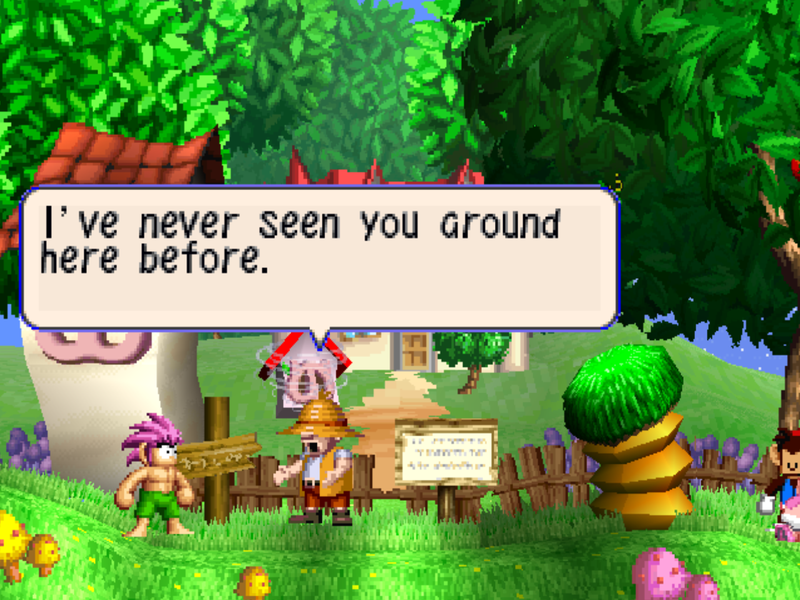
Tomba!
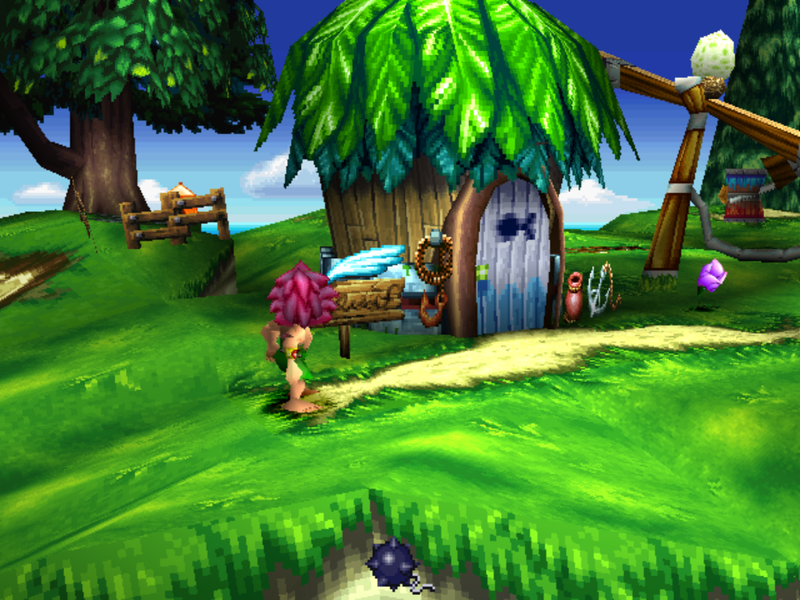
Tomba! 2
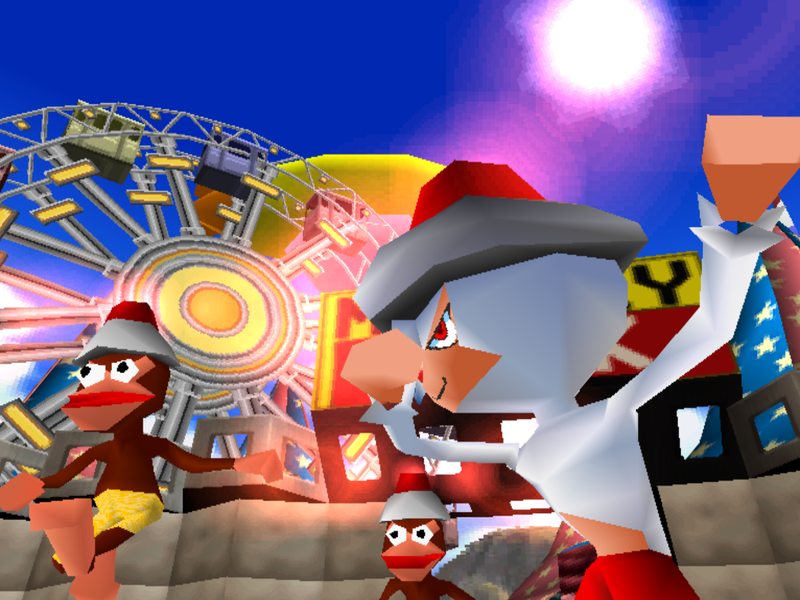
Ape Escape
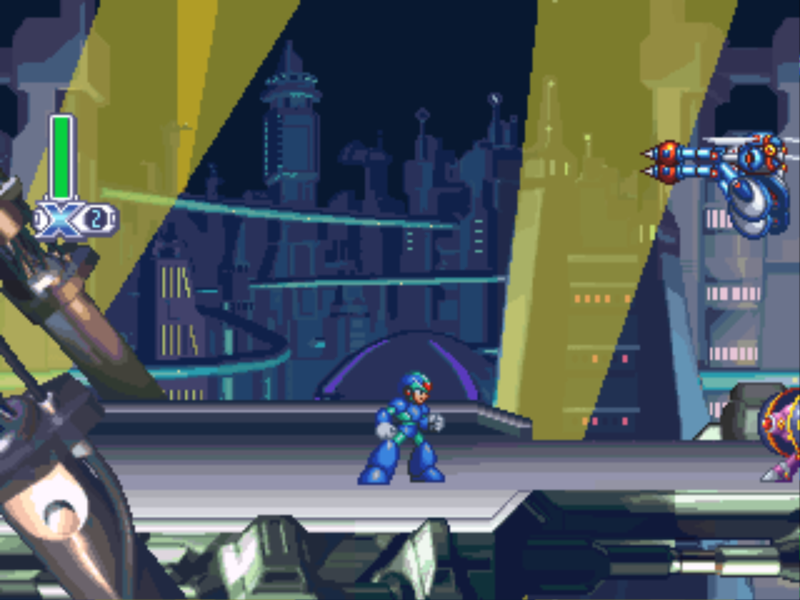
Mega Man X4
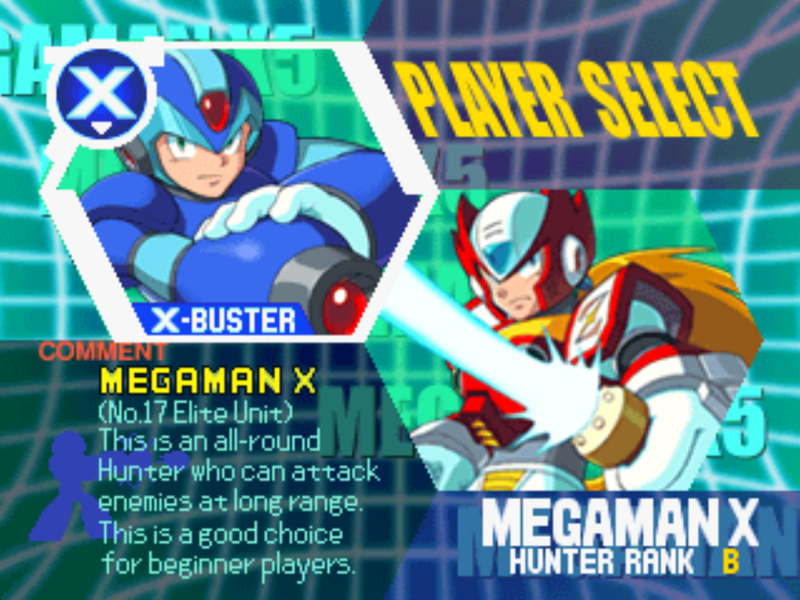
Mega Man X5
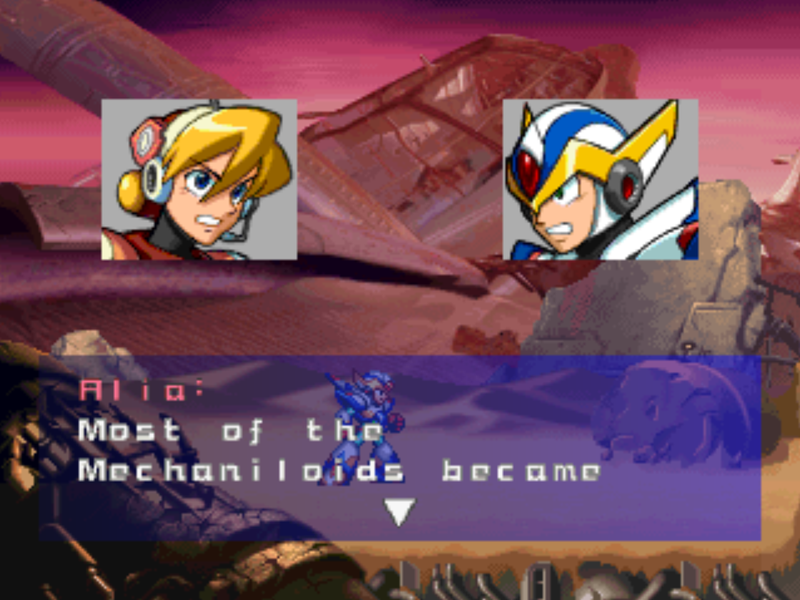
Mega Man X6
Background on the original prototype: I Built a PS1 Static Recompiler With No Prior Experience (and Claude Code)
Games
Each game is its own repository that pins a framework commit as a submodule and ships its own playable release with an in-app launcher. Validation and feature coverage continue to improve per title.
| Game | Repository | Latest build | Notes |
|---|---|---|---|
| Tomba! | TombaRecomp | releases | Widescreen, supersampling, save/load, mod packages. |
| Tomba! 2 | Tomba2Recomp | releases | Multi-track disc support; adaptive widescreen through 21:9. |
| Ape Escape | ApeEscapeRecomp | releases | Widescreen to 21:9, memory-card save/load, dual-analog. |
| Mega Man X4 | MegaManX4Recomp | releases | Playable; 2D widescreen. |
| Mega Man X5 | MegaManX5Recomp | releases | Playable; 2D widescreen. |
| Mega Man X6 | MegaManX6Recomp | releases | Playable; stages, controller, save/load; 2D widescreen to 21:9. |
| Tsumu Light | TsumuLightRecomp | releases | Japanese-only title (SLPS-02253); first consumer of live language switching. |
| Xenogears — community | OpokXeno/xenogears-recomp | — | Independent project by @OpokXeno, who also contributed widescreen cull-site work upstream. |
Each game repo carries its own build/run instructions, keyboard/controller mappings, and per-game settings. This repository builds the framework and a standalone BIOS runtime supporting OpenBIOS and a compatible retail BIOS — see Release Package below.
Bringing up a title of your own? Start with docs/GAME_PROJECT_SETUP.md (submodules, bundled-release CI template, release checklist), then CONTRIBUTING.md. Community projects are listed here alongside the rest.
What It Is
PSXRecomp translates PS1 MIPS binaries into C, then compiles that C as a native executable linked against a PS1 hardware runtime. The v4 architecture links two recompiled low-level BIOS backends: the bundled OpenBIOS and a compatible retail BIOS (currently SCPH1001.BIN). Whichever one the player selects runs as the kernel; that low-level (LLE) recompiled BIOS is the foundation and the correctness oracle. Everything is architected LLE-first: accuracy comes first, and convenience is layered on top, opt-in, never underneath.
Three things sit on that foundation:
- An optional HLE tier. A high-level BIOS layer can be laid over the
selected recompiled kernel — OpenBIOS or retail BIOS — to skip the boot sequence and service a few BIOS calls directly. It is a player-facing convenience and optimization, enabled by default but fully opt-out (
[runtime] bios_hle = false). Anything it doesn't implement falls straight through to the selected recompiled BIOS, so the LLE path stays load-bearing and remains the oracle every accuracy check runs against. The boot-skip half works on both linked BIOS backends — the bundled OpenBIOS and a player's retail BIOS dump reach the game the same way — while the kernel-call half is enabled per image and says so at startup when it isn't. - Ahead-of-time overlay sharding. PS1 games stream code from disc into
reused RAM addresses. When the stored bytes and loader behavior are known, PSXRecomp can discover and compile those overlays before gameplay, without a full decompilation. The runtime selects matching native code using byte guards. Capture-and-compile remains available for gaps. See the AOT sharding guide for the reusable workflow and limits.
- A general-purpose interpreter — as a transient safety net, not a fixture.
Anything not yet native (a freshly streamed overlay, RAM-installed code) runs in a small MIPS interpreter so the machine is always correct. But the interpreter is explicitly meant to be compiled away: the same capture feeds the TCC-backed sharding pipeline, which turns interpreted code into cached native shards in the background. The more a game runs, the less the interpreter is doing — the goal state is an idle interpreter and 100% native execution.
PSXRecomp is a framework. Game-specific projects live in their own repositories with psxrecomp/ and recomp-ui/ as root-level submodules and game code (game.toml, seeds, CMake) at the repo root. See docs/GAME_PROJECT_SETUP.md.
Getting Started
Build requirements
Every platform needs Git, Python 3, CMake 3.20+, Ninja, and a C/C++ compiler (the recompiler is C++20; the runtime is C99 + C++17). SDL3 is fetched automatically if no system package is found.
Windows (PowerShell)
winget install Git.Git Python.Python.3.12Git for Windows also provides the bash the setup script uses. Then pick one of these for the compiler, CMake, and Ninja:
- Bundled toolchain (recommended). Download
cmake-clang-v1-windows-x64.zipfrom retcomm-toolchains, unzip it (for example to
C:\retcomm-toolchain), and in the PowerShell window you will run the setup from:
  $env:PSXRECOMP_TOOLCHAIN_DIR = "C:\retcomm-toolchain"
$env:Path = "C:\retcomm-toolchain\bin;$env:Path"- Visual Studio. Install
Build Tools for Visual Studio 2022 with the "Desktop development with C++" workload, plus
winget install Kitware.CMake Ninja-build.Ninja, and run the setup from a "Developer PowerShell for VS 2022" window.
macOS
xcode-select --install
brew install git cmake ninja python
Linux (Debian/Ubuntu)
sudo apt install git build-essential cmake ninja-build python3Linux and macOS users can also use the bundled toolchain pack instead of a system compiler: tools/fetch_toolchain.sh --artifact unpacks it and prints the directory to export. The full dependency table, MSYS2 notes, and troubleshooting are in docs/BUILDING.md.
Set up a game project (recommended)
Source Code Required
Clone the master branch of this repo with submodules, or download one of the latest nightly releases. You store this wherever you like on your project space, as it's own project - you do NOT build your recomp game data inside the psxrecomp folder.
New Project Scaffolding
Run the setup script. Pass your disc (.cue) and, optionally, a legally obtained retail BIOS dump. The script prompts for everything else; answer Y to Generate to produce the game and BIOS C. The new project is created under --dir / -Dir with the name you choose.
Windows
# Disc + BIOS
powershell -File tools\new_project_layout\setup_project.ps1 `
  -Disc C:\dumps\game.cue -Bios C:\BIOS\SCPH1001.BIN -Dir C:\src

# Multi-disc + BIOS: scaffold from disc 1, then register the whole set
powershell -File tools\new_project_layout\setup_project.ps1 `
  -Disc C:\dumps\game-disc1.cue -Bios C:\BIOS\SCPH1001.BIN -Dir C:\src
python tools\new_project_layout\update_disc_set.py --game-toml C:\src\MyGameRecomp\game.toml `
  C:\dumps\game-disc1.cue C:\dumps\game-disc2.cue C:\dumps\game-disc3.cue
macOS / Linux
# Disc + BIOS
sh tools/new_project_layout/setup_project.sh \
  --disc ~/dumps/game.cue --bios ~/bios/SCPH1001.BIN --dir ~/src

# Multi-disc + BIOS: scaffold from disc 1, then register the whole set
sh tools/new_project_layout/setup_project.sh \
  --disc ~/dumps/game-disc1.cue --bios ~/bios/SCPH1001.BIN --dir ~/src
python3 tools/new_project_layout/update_disc_set.py --game-toml ~/src/MyGameRecomp/game.toml \
  ~/dumps/game-disc1.cue ~/dumps/game-disc2.cue ~/dumps/game-disc3.cue
Then build with the generated build.ps1 / build.sh in the new project. Full flow, every flag, CI, and the release checklist: docs/GAME_PROJECT_SETUP.md.
Project Folder Structure
After running the project setup wizard script as per above, you will have a project layout made for you, as seen here:
These are the 3 most important folders to be aware of:
psxrecomp This is the module for the runtime engine. It also contains nested submodules under lib/recomp-net and lib/retcomm-rbengine which are used for netplay connectivity, and also for certain offline features as well like frame rewind.
recomp-ui This module is for the UI. It handles user interface at the startup of the released/compiled program for configuring controls, settings, a netplay browser, and also manages setup wizards for self-compilation on end user machines.
mods/preloaded in this directory, mod manifests are stored which catalog the mods available for the title. Adding new mods requires an additonal manifest or an entry in an existing manifest.
Other Folders the other folders produced are generated from template files by the setup script run above, which provide various features and tools specific to the title itself and might be referenced by the compiler, or by diagnostics/dev software.
New here?
The fastest way in:
| Path | Doc |
|---|---|
| How a game runs | docs/EXECUTION_MODEL.md |
| Architecture | docs/ARCHITECTURE.md |
| AOT overlay sharding (disc discovery, per-game recipes, validation) | docs/AOT_SHARDING.md |
| Build the framework | docs/BUILDING.md |
| Ship a game repo (submodules + CI + release checklist) | docs/GAME_PROJECT_SETUP.md |
| Netplay (rollback, SFU/ICE, dual-raster, disc gates) | docs/NETPLAY.md |
| Bundled-release CI template | docs/ci/templates/game-release.yml |
| Local Generate & rebuild CLI | docs/LOCAL_CODEGEN_SDK.md |
| Mods | docs/MOD_PACKAGES.md |
| Widescreen / native-wide | docs/WIDESCREEN.md |
| Enhancement tier (PGXP, renderers, load accel) | docs/ENHANCEMENTS.md |
| TCP debug command reference | docs/TCP_COMMANDS.md |
| Contributing | CONTRIBUTING.md |
Which PlayStation BIOS does it use?
Builds support two recompiled BIOS backends: OpenBIOS and a compatible retail BIOS. OpenBIOS is a free, open-source PlayStation BIOS from the PCSX-Redux project that we're allowed to distribute. It is bundled and runs by default, so you usually do not need to provide a BIOS dump. Bring a game disc image (.cue/.bin, .iso, or MAME-compatible .chd) and play.
If you'd rather use a retail BIOS, pick your dumped SCPH1001.BIN in settings and it will be used instead. Clear that choice to return to OpenBIOS.
Two things worth knowing:
- The retail BIOS has to be the exact image linked into the build, so a
different dump can't be swapped in. If yours doesn't match, the game says which one it expects, and you can carry on with OpenBIOS.
- Save files work either way. Memory cards are shared. Savestates are not:
one made with OpenBIOS won't load under the retail BIOS, or the other way round, so the game won't let you mix them.
Titles with a verified OpenBIOS incompatibility require the compatible retail BIOS instead and say so up front.
Developers: see
docs/BIOS_SELECTION.mdfor the[runtime] openbiossetting and the selection rules.
Widescreen
Not a stretch and not a crop — a genuinely wider field of view, computed at recompile time by widening the game's own projection and culling maths. 4:3 output stays byte-identical when widescreen is off.
This is framework tooling, not a per-game bolt-on. Any project built on PSXRecomp can enable it from a [widescreen] block in its game.toml — the generic cull-widening, FOV and aspect machinery lives here, and bringing up a new title is a matter of locating that game's cull sites rather than writing new rendering code.
It works on both 3D and 2D engines. 2D is the harder case: a sprite engine has no camera to widen, so the background tile ring, streamer and packet budget all have to be widened in step with the renderer.
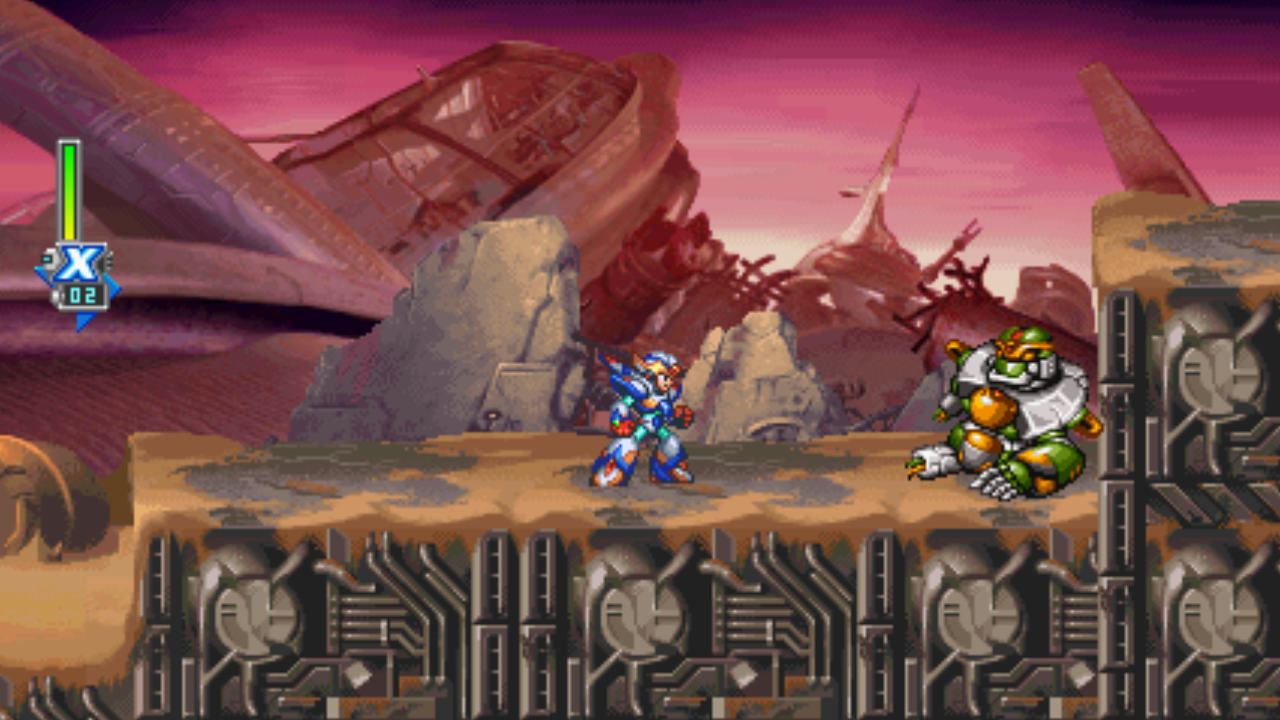
Mega Man X6 — 16:9. A 2D sprite engine widened: more stage either side, no stretching.
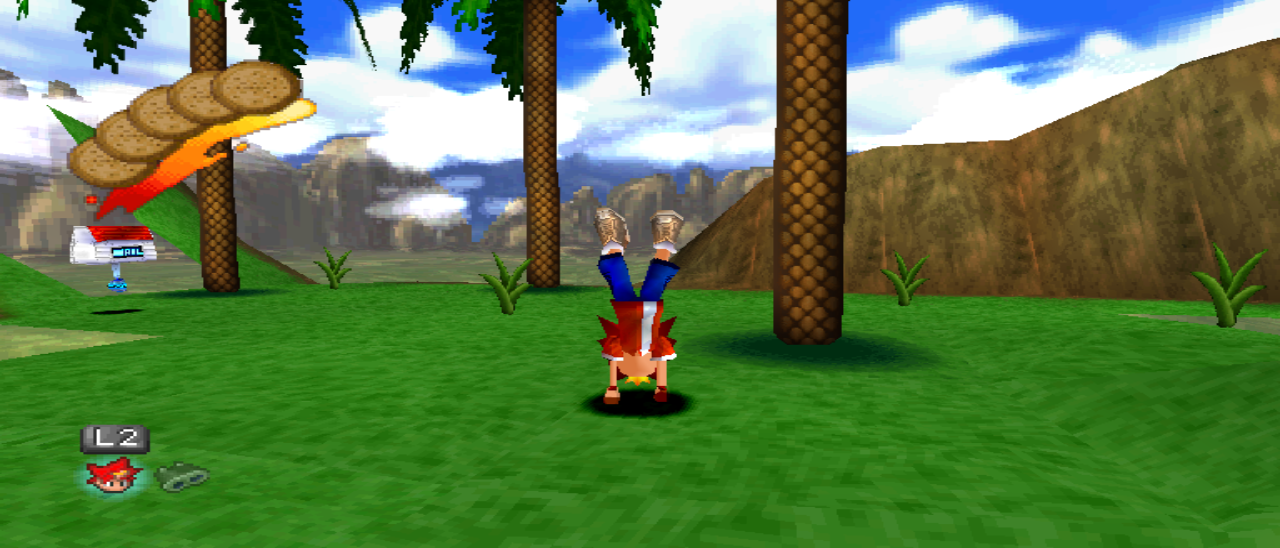
Ape Escape — 21:9. A wider 3D frustum, not a zoomed one.
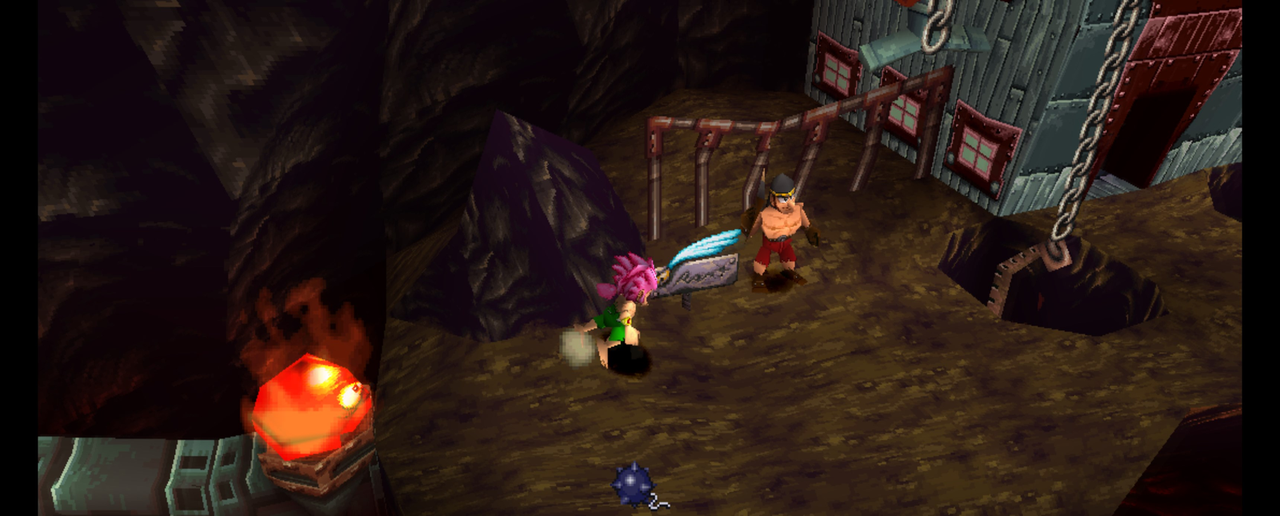
Tomba! 2 — adaptive. The view tracks the window, up to an ultrawide cap.
See docs/WIDESCREEN.md for the per-game configuration.
Mods
Mods are versioned packages, not patched discs. A .psxmod is an installation, provenance and trust boundary; each package contributes any number of independently toggleable features, and enabling one never silently reconfigures another.
Crucially, your disc image is never rewritten. The player selects a verified stock BIN/CUE, and resolution produces guarded native operations and sparse disc overlays over that image — so the original stays intact and a mod can be turned off as easily as it was turned on.
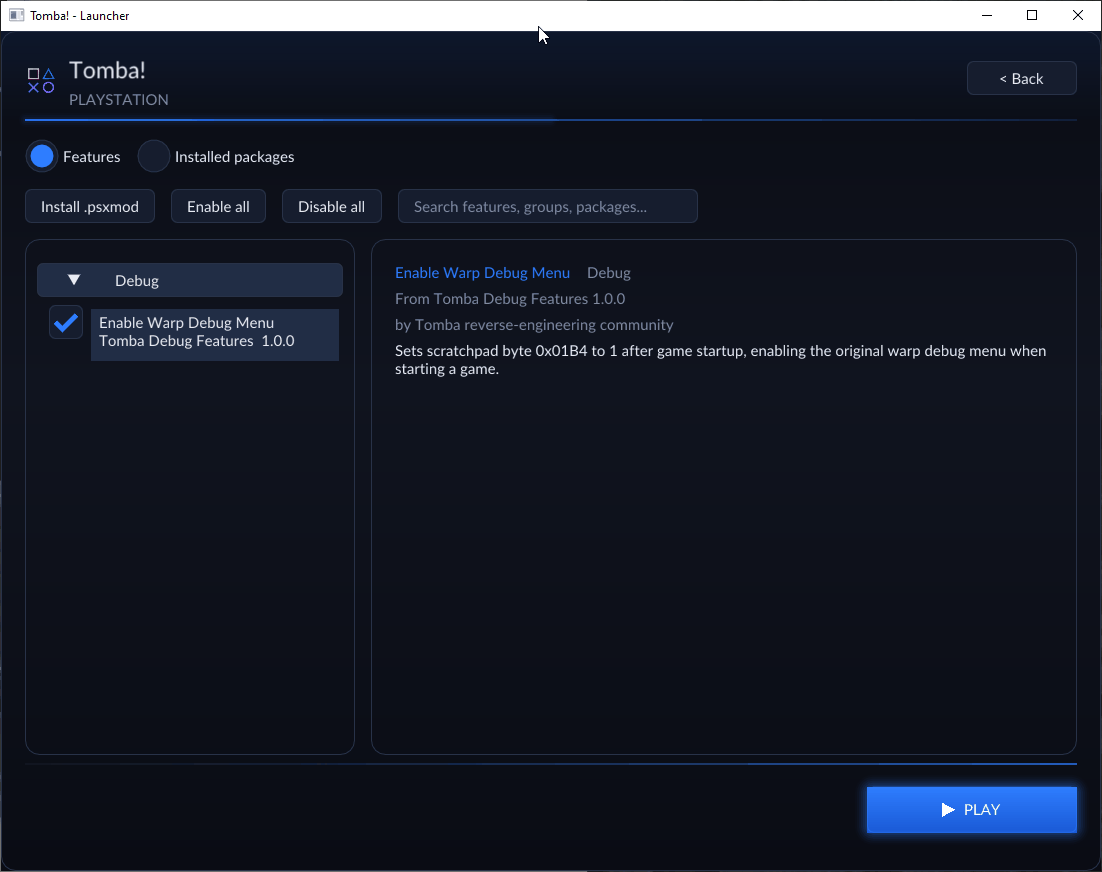
Add a mod
Start with a source directory containing a manifest and, when needed, payload files:
my-mod/
├── manifest.toml
├── README.txt
└── assets/
    └── replacement.bin
A minimal guarded executable patch looks like this:
format_version = 1
id = "example.quick-start"
version = "1.0.0"
name = "Quick-start example"
author = "Your name"
description = "One independently toggleable gameplay change."
resolver = "declarative"
save_compatibility = "shared"

[[target]]
game_id = "SLUS-00000"
# Replace this with the SHA-256 of the exact supported stock disc image.
disc_sha256 = "0000000000000000000000000000000000000000000000000000000000000000"

[[feature]]
id = "quick-start"
name = "Quick Start"
description = "Skips the game's startup delay."
group = "Gameplay"
default_enabled = false

[[patch]]
feature = "quick-start"
target = "main_exe"
address = 0x80041234
expected = "2a 00 02 24"
replace = "00 00 02 24"
main_exe addresses are PSX guest virtual addresses. The complete expected bytes are checked after the BIOS loads the executable and before any write is made, so a package fails closed on the wrong revision. For disc changes use disc_raw or disc_user; for a larger asset use a file-backed [[overlay]] with payload and expected-range SHA-256 hashes.
From a PSXRecomp checkout, pack the directory into a deterministic archive:
python tools/psxmod_pack.py my-mod my-mod-1.0.0.psxmodInstall the resulting .psxmod through the launcher's Mods manager. A game can also ship reviewed, default-disabled packages by placing unpacked sources at mods/preloaded/packages/// and copying mods/preloaded beside the game executable as mods; see Tomba's build wiring below.
Choose the narrowest mechanism that describes the change:
| Change | Package mechanism |
|---|---|
| Fixed code or data bytes | Guarded [[patch]] on main_exe, disc_raw, or disc_user |
| A player-selectable boolean, choice, or number | Feature-local [[option]] plus when, replace_from, sparse fields, or when_integer |
| Artwork, script, audio, or another large disc asset | Hashed file-backed [[overlay]]; do not rebuild the player's stock image |
| Host setting or live game behavior | Trusted static [[plugin]], compiled into the game and selected by a stable id |
| OpenGL bezel artwork | A disabled-by-default package using the trusted psx.bezel plugin and a user-selected image resource |
| Several features composing one shared table, bitfield, routine, or allocation | Game-owned resolver = "builtin:", only when declarative operations cannot express the composition |
Format versions 2–4 add bounded integers, ordered constraints, linked MIPS LUI/ORI values, sparse owned fields, and integer predicates. Format 5 adds trusted static plugins. The full schemas and resolution rules are in docs/MOD_PACKAGES.md.
The enabled feature set is resolved before boot. Changing it may require a relaunch, but never asks the player to patch a disc or compile the game.
Trusted game code
A .psxmod never supplies or loads native code. If a feature needs a per-VBlank callback or must configure a host-side facility, the game registers an implementation that is already linked into its executable:
#include "mod_plugins.h"

static void example_vblank(void) {
    if (psx_mod_game_started())
        psx_mod_write_byte(0x1F8001B4u, 1u);
}

PSX_MOD_CONSTRUCTOR(register_example_mod) {
    (void)psx_mod_register_vblank_plugin(
        "example.quick-start", example_vblank);
}
The manifest activates it with:
format_version = 5

[[plugin]]
feature = "quick-start"
id = "example.quick-start"
Activation callbacks are for one-time pre-renderer configuration; VBlank callbacks are deterministic guest-time work. Plugins receive only the narrow services in runtime/include/mod_plugins.h, can read validated feature options, and are selected by registry id—not by a library path or symbol supplied by an archive. Prefer ordinary patches and overlays whenever they are enough.
Converting an existing patch or patcher
Large legacy mod suites should be converted feature by feature:
- Pin the exact clean disc revision and keep the original patcher or patched
output as a byte-for-byte test oracle, not as the runtime payload.
- Split its UI into independent features and typed, feature-local options.
Enabling one feature must not silently select another.
- Map each owned change back to the stock image: executable writes become
guarded
main_exepatches, small disc writes become guarded disc patches, and large assets become content-addressed overlays. - Use sparse fields when features own adjacent bytes in one record. Introduce
a trusted built-in resolver only when independent selections must synthesize one shared semantic object.
- Test every feature alone, representative combinations, all-off identity,
wrong-revision rejection, collision diagnostics, and byte parity with the oracle. Record authorship and redistribution permission for every imported asset.
Do not ship a prepatched disc or use the legacy derived_disc/VCDIFF path for new packages. It remains conversion scaffolding only.
Real examples
- Tomba's merged catalog
is the compact starting point. Its trusted plugins show activation callbacks, guest-VBlank behavior, launcher options, display features, controller policy, and skip-FMV behavior; its CMake file shows how to compile the plugin sources and preload the package catalog.
- Mega Man X6's unmerged Tweaks package branch
is the large conversion example. The package generators preserve patcher parity while producing guarded stock-targeted operations and content-addressed assets; the trusted resolvers demonstrate deterministic composition of shared records and injected code. The earlier
feature/mmx6-tweaksbranch records the patcher-parity and write-classification work that feeds this conversion; its patched-disc/pre-bake experiments are history, not the recommended package delivery model. Both branches are review material rather than a released compatibility promise.
Swap language on the fly
A general localization layer captures the game's own strings out of memory and substitutes translated bytes as it runs. Any source language to any target — the mechanism has no built-in notion of a "default" language, so a Japanese-only release can be played in English just as readily as an English one can be played in another language.
Switching is live. Tables are human-editable TOML under translations/, one column per language, hot-reloaded while the game is running — and the launcher carries a language picker. A translator can edit a line and see it in-game without rebuilding anything.
The hard part is glyphs, not strings. Substituted text is drawn through the game's own glyph routine with per-character proportional advances calibrated by measuring the real ink width of each glyph tile in VRAM, plus auto-fit condensing so longer translations still fit a box sized for the original. That means no engine changes and no regeneration to add a language.
See docs/STRING_TRANSLATION.md; Tsumu Light (SLPS-02253) is the first title using it.
Renderers
| Backend | Status |
|---|---|
| OpenGL | Default. GPU-authoritative VRAM/FBO renderer; moves rasterization and supersampling onto the GPU. |
| Vulkan | Experimental. Built when the SDK is present, opt-in at runtime; falls back to OpenGL if unavailable. |
| Software | CPU rasterizer — the reference look, and the most portable fallback. |
Geometry enhancements (opt-in)
Two optional fixes for the PS1's fixed-point geometry pipeline, off by default so the faithful look stays the baseline. Set them in game.toml or the player's settings.toml:
[video]
geometry_correction   = true   # sub-pixel vertex precision — removes polygon
                               # jitter/wobble. Needs supersampling >= 2.
perspective_texturing = true   # perspective-correct UVs — removes the texture
                               # warp on large floor/wall polygons.
supersampling         = 2
Both are visual-only: the GTE's guest-visible screen coordinates stay integer and fully faithful, so game logic and culling are unaffected. Supported on all three renderers. See docs/ENHANCEMENTS.md §G1.
Release Package
This repository's release is a standalone BIOS runtime, not a game. It can boot either the bundled OpenBIOS or a compatible retail BIOS for memory-card management; to play a title, grab its release from the Games table.
- Download
PSXRecomp-v*-windows-x64.zipfrom Releases. - Extract it and run
PSXRecomp.exe. - It boots on the bundled OpenBIOS. To use your compatible retail BIOS dump
instead, pick it in settings.
The package includes bios/openbios.bin and its MIT notice at bios/OpenBIOS.LICENSE, but no retail PS1 BIOS, game disc image, generated game code, or save data. If you choose a retail BIOS, that path is remembered next to the executable as bios.cfg; clear the choice (or delete that file) to go back to OpenBIOS.
The game recomp projects use the same runtime picker contract but ship a Dear ImGui launcher: on first run it asks for the game disc image and uses OpenBIOS automatically. The optional retail BIOS row lets you select your own verified dump or clear that choice to return to OpenBIOS. The launcher also configures video, controls, and per-game settings. Keyboard/controller mappings live in each game's repo and launcher, not here.
Philosophy — toward 100% static recompilation
Where the project is headed. Development so far has been breadth-first: bring up varied games as playable public builds and prove that the framework generalizes. With that foundation established, the project is now focused on a depth / optimization phase: pushing each game toward 100% static coverage, tightening timing accuracy, driving load times toward zero, and hardening the renderer and audio paths. Expect existing projects to get *faster and more accurate* from here.
The goal is simple and absolute: a PS1 game should run as native code, not be emulated. Every MIPS instruction the game executes should ideally have been translated to C and compiled ahead of time. No interpreter on the hot path, no HLE shims, no "good enough" approximation of the hardware — the selected recompiled BIOS, OpenBIOS or retail BIOS, is the kernel, and the recompiled game is the game.
PS1 games make that goal hard in one specific way: overlays. Games stream code off the disc into RAM at runtime and execute it, then overwrite it with the next overlay. That code does not exist in the executable at build time, so a pure ahead-of-time recompiler cannot see it. This is the frontier the project is working through. Today a majority of a supported game runs as statically recompiled native code, but not yet 100%.
How we close the gap, without ever compromising correctness:
- Static first. The main executable and both supported BIOS backends —
OpenBIOS and retail BIOS — are fully recompiled ahead of time. This is the bulk of execution and it is always native.
- Capture → compile → cache for overlays. As the game runs, overlays are
captured the moment they load. Offline, each is recompiled to a native DLL keyed by its content, cached, and on later runs loaded and dispatched as native code before any fallback. Coverage grows as the game is played: every overlay someone reaches becomes native for everyone after.
- Interpreter failover — only for code that isn't static yet. A small
MIPS interpreter runs runtime-installed code (overlays/dirty RAM) that hasn't been captured-and-compiled. It is a safety net and a coverage feeder, never a substitute for recompiling static code, and never on the selected BIOS (OpenBIOS or retail BIOS) or main-EXE path.
- Precision over recall. A piece of code we haven't compiled safely falls
back to the interpreter and gets captured for next time — under-coverage self-heals. A piece we compile wrong would corrupt the machine, so the system biases hard toward correctness: native code is only dispatched when its source RAM is provably unchanged, and a registration is revoked the instant the RAM it was compiled from is overwritten.
Two honest bounds. The worst case is always performance, never correctness — anything not yet native simply runs interpreted, correctly.
Known corner case — genuinely self-modifying / per-load-relocated code. Some code is rewritten or relocated to different bytes on every load, so it is not static by definition and cannot be recompiled ahead of time into a single correct translation. This code remains interpreted — permanently, as far as the current design is concerned, and that is an accepted, correct outcome (the interpreter runs it faithfully; only speed is lost). It is a narrow corner, not a wall. We may someday aim to cover it — e.g. by detecting the relocation/patch pattern and baking it in at compile time (keyed by relocation parameters), or by compiling at load time — but we make no promise, and the project is fully correct without it.
The aspiration is 100% static coverage — every reachable instruction native, the interpreter idle. The capture-and-recompile loop converges toward it the more a game is played; this branch is where that machinery is being built.
Status
The LLE recompiled BIOS — either bundled OpenBIOS or the compatible retail backend — boots and hands off to the game across supported projects. Games run as majority-native code, with the capture-and-compile pipeline filling overlays as they're reached. The breadth-first push is essentially done; work now is depth and optimization.
Core subsystems, framework-wide:
| Subsystem | State |
|---|---|
| BIOS recompilation (OpenBIOS + compatible retail BIOS) | Both boot to the shell and hand off to the game; the selected LLE backend is the correctness oracle |
| HLE BIOS tier | Optional boot-skip + service layer over the selected recompiled BIOS (OpenBIOS or retail BIOS); default on, opt-out |
| Game EXE recompilation | Title/menus/save-load/gameplay reached across supported projects |
| Overlay capture → compile → cache | static → gcc → tcc; coverage grows as a game is played |
| Interpreter failover | Correctness net for not-yet-native code; being compiled away by sharding |
| CD-ROM / MDEC / XA | FMVs stream and play; XA/CDDA timing stays authentic |
| Memory cards | Save and load supported across game projects |
| SIO0 controllers | Digital pad + DualShock config; per-game analog/digital selection |
| GPU | Software + OpenGL + Vulkan backends; widescreen FOV/HUD work per game |
| SPU | Working; reverb/noise/sweep and exact SPU-IRQ accuracy still being tightened |
| Interrupts, COP0, timers, GTE | Working; cycle-accuracy foundation is an active depth-phase focus |
Validation scope varies by game — see the Games table and each project's release notes for current coverage.
Open depth-phase fronts: cycle/IRQ-phase timing accuracy, load-time-toward-zero (data sharding), renderer parity between the software/GL/Vulkan backends, and driving overlay coverage the last mile to 100% static.
Running this repository's standalone BIOS runtime without a game is useful for memory-card management under OpenBIOS or a compatible retail BIOS; to build and play a title, use its game repo from the Games table.
Setup
Builds natively on Windows (MSVC/MinGW), macOS (Apple Silicon & Intel), and Linux. The selected BIOS backend — OpenBIOS or retail BIOS — uses host fibers for its thread scheduler: Win32 Fibers on Windows and ucontext on POSIX (runtime/src/psx_fiber.c). This keeps the selected recompiled backend's cooperative thread switching, especially the CD-boot handoff, consistent on every platform.
Requirements at a glance (full details, dependency table, and per-platform prerequisites in docs/BUILDING.md):
- A C/C++ toolchain: MSVC or MinGW/MSYS2 (Windows), Apple Clang (macOS),
Clang/GCC (Linux). CMake 3.20+; on macOS/Linux also
ninjaandpkg-config. - SDL3 3.4+ (a system package when available, otherwise fetched automatically).
SDL2 is available only as an explicit build fallback.
- A retail PS1 BIOS is optional — builds use the bundled OpenBIOS by
default. Supply a legally obtained
SCPH1001.BINdump only if you want to select the retail BIOS instead (see Which PlayStation BIOS does it use?). - For game projects, a legally obtained game disc/EXE dump. Not included.
Every runtime and game configure uses SDL3 unless you explicitly append -DPSX_SDL_BACKEND=SDL2 to its CMake command. CMake prints the selected backend during configuration; it never silently falls back from SDL3 to SDL2.
Build the framework (recompiler tool + standalone BIOS runtime with OpenBIOS and retail BIOS support):
git clone --recurse-submodules https://github.com/mstan/psxrecomp.git && cd psxrecomp

# 1. Recompiler tool (produces psxrecomp-bios and psxrecomp-game)
cmake -S recompiler -B recompiler/build -G Ninja -DCMAKE_BUILD_TYPE=Release && cmake --build recompiler/build

# 2. Generate a BIOS backend. REQUIRED before the first runtime build: the
#    recompiled BIOS C is build output, not tracked, so a fresh clone has none
#    and the runtime configure fails with "No recompiled BIOS backend
#    available". OpenBIOS is bundled and MIT-licensed, so this needs no dump.
bash tools/regen_bios.sh --config bios/OpenBIOS.toml
bash tools/regen_bios.sh --config bios/SCPH1001.toml   # optional, needs your own dump

# 3. Runtime (produces psx-runtime)
cmake -S runtime -B runtime/build -G Ninja -DCMAKE_BUILD_TYPE=Release -DPSX_RECOMP_UI=OFF && cmake --build runtime/build --target psx-runtime
Step 2 depends on step 1: regen_bios.sh builds the emitter but does not configure it, so run it only after recompiler/build exists. Re-run step 2 whenever the recompiler's BIOS emitter changes — a stale generated/ raises a fingerprint-mismatch warning at configure time.
On Windows swap -G Ninja for your generator if you prefer (e.g. -G "Unix Makefiles"); always keep an explicit -DCMAKE_BUILD_TYPE so the generated C is optimized. Game projects generate their own generated/_*.c files and link this runtime through CMake — see docs/BUILDING.md.
Input
Keyboard and Xbox-style controller input work out of the box; the default fullscreen toggle is F11 / Alt+Enter / Cmd+F. Full button maps, controller configuration, and rebinding live in each game's repo and in-app launcher — they're game-facing, not part of the framework. The standalone framework runtime accepts keyboard input for navigating the selected OpenBIOS or retail BIOS shell and memory-card tools.
Architecture
The recompiler emits C functions and dispatch tables for game code and both BIOS backends: bundled OpenBIOS and a compatible retail BIOS. The runtime loads the selected BIOS and game assets into emulated PS1 memory, links the generated C as native code, and simulates hardware through MMIO handlers for GPU, DMA, timers, CD-ROM, MDEC, SIO0, memory cards, SPU, GTE, and interrupt delivery. The selected recompiled BIOS is the low-level (LLE) kernel and correctness oracle; an optional HLE tier lays instant boot-skip and a few BIOS services on top, always falling through to that OpenBIOS or retail BIOS kernel.
Code that can't be seen ahead of time (disc-streamed overlays) is captured and compiled to native code the first time it appears (static → gcc → tcc backend), with a small interpreter as the correctness fallback until it is. Full story in docs/EXECUTION_MODEL.md; component-level detail in docs/ARCHITECTURE.md.
See CONTRIBUTING.md and CLAUDE.md for the development rules, and docs/internal/ for the phased plans and deep design notes (PLAN.md, FAITHFUL_TIMING_PLAN.md, …).
Load Times
The runtime models authentic 1× CD-ROM timing by default — the same read and seek delays as real hardware. On top of that faithful baseline, load-time acceleration is opt-in, per game, so the accurate path is never compromised:
- Turbo — a hold-to-fast-forward key that compresses loads on demand
(keyboard
[KeyMap] Turbo, default Tab; controller[hotkeys] fast_forward_pad, default Select+L1, rebindable under the launcher's Controller → Host Shortcuts alongside Rewind and Save states). A press-to-latch twin, Turbo toggle ([KeyMap] TurboToggle, default F9;[hotkeys] fast_forward_toggle_pad, unbound by default), locks the same speed until pressed again. Controller host shortcuts bound to a single button or trigger are chords with Select — the launcher shows them asselect + …; only a two-button capture replaces the implicit Select. Backspace while the launcher is listening clears a shortcut; in the files that is0for a[hotkeys]pad value andNonefor a[KeyMap]key (a present-but-empty orNoneline is an explicit unbind, a missing line keeps the built-in default). - The "Fast Loading (host pacing)" and "CD Speed" mods — automatic
acceleration during load waits, shipped with every title and off by default, with
turbo_audio_sinkkeeping the SPU timeline coherent through the burst. Host pacing only changes how fast real time is fed to a load, so the guest cannot desync; CD speed changes when the game receives CD interrupts. The former[runtime] turbo_loadsconfig key is deprecated and ignored — seedocs/config_schema.md. [runtime] idle_skip— proof-gated fast-forward through idle pollingloops, with guest time and device events still advancing exactly.
- Warm CD routes (
[[runtime.warm_cd_routes]]) — narrowly-scoped fastread cadence armed on a specific
SetLoc, restoring authentic timing the moment the read pattern diverges.
FMV/XA and CDDA streaming, seek, and motor timing always stay authentic regardless of the accelerators. Driving load times toward zero (via data sharding) is an active depth-phase effort — see docs/LOAD_TIME_ZERO.md and docs/disc-speed.md.
Help make your game faster — just by playing it
Why isn't the game already at full speed everywhere? Most of a game's code is converted ("recompiled") into a fast native program ahead of time. But PlayStation games don't keep all of their code on screen at once — they stream extra chunks of code off the disc as you reach new areas (these chunks are called overlays). We can't convert a chunk we've never seen, and the only way to see it is for someone to actually visit that area. Until then, that area's code runs in a slower compatibility mode.
You can help, just by playing. While you play, the game quietly notices which areas are still running in the slow mode, takes a snapshot of them, and converts them to fast native code in the background — often within a minute, while you keep playing. The more places you visit, the faster the game gets. This happens automatically; you don't have to do anything.
Your discoveries persist for you. They are saved in a file written next to the game called overlay_captures.json, and your local cache is rebuilt from it automatically — areas you have visited stay fast on every later session.
Please do not post overlay_captures.json publicly. The file contains verbatim snapshots of the game's code read from your disc, which is copyrighted material — keep it on your own machine, alongside your disc image. A metadata-only contribution format (addresses and checksums, no game code) is planned so discoveries can be shared safely in the future.
Contributing
Contributions are welcome — AI-assisted or not — as long as they're reviewed, tested, and keep the core game-agnostic. A few things hold this project together: the selected faithfully recompiled BIOS — OpenBIOS or retail BIOS — is the baseline and oracle, generated code is never hand-edited (fix the recompiler and regenerate), and a change proves itself against the Beetle oracle / on screen rather than by assertion. Game-specific work lives in the game repos, which pin exact framework and UI commits as root-level submodules.
- New title / bundled release:
- Framework PRs:
CONTRIBUTING.md(rules, verification,regression checklist, how a fix reaches a game through its pin)
Bugs and build problems go to GitHub issues (include gcc -v / OS / generator for build failures); design discussion happens in the R.A.I.D. Discord (invite below).
License
PolyForm Noncommercial 1.0.0. See LICENSE. Copyright © 2026 Matthew Stanley; commercial licensing inquiries go to him at .
Third-party components vendored into the runtime keep their own terms, and their notices ship with every release under licenses/ in the package (sources in runtime/licenses/). See THIRD_PARTY_ATTRIBUTION.md for what is vendored and why.
Retail PS1 BIOS images and game disc images remain copyrighted by their respective owners and are not distributed. This project does distribute the from-scratch, MIT-licensed OpenBIOS image under the notice in bios/OpenBIOS.LICENSE. Game assets and disc data are always supplied by the user from their own collection. Release executables (and per-game overlay caches) contain statically recompiled (machine-translated) builds of the original code, the same distribution model used by other static recompilation projects such as N64: Recompiled.
R.A.I.D. — Retro AI Development · a Discord for AI-assisted retro reverse-engineering, decomp & recomp

From the project's repository, fetched . Images load from GitHub.
Releases
Feed-
Release notes
Automated nightly source snapshot of
masterat e8e3ee2d415ec4a7aa9ff0a10825b59b3f87354f.The attached archives contain the full tree including submodules
(lib/recomp-net,lib/retcomm-rbengine), which GitHub's auto-generated
source archives leave out. Set up a game project from it with the
scripts intools/new_project_layout/-- seedocs/GAME_PROJECT_SETUP.md.This tag moves every night; do not pin to it.
Changes since previous nightly (641537be8210f96f61a8ad69d6021844b56e30e1)
- d44bdfc6 tests: stub the masked-reject and NCLIP-branch callbacks in the overlay harness
- a423f74f tests: pgxp_session builds on MinGW (no POSIX setenv/unsetenv)
- 54826826 tests: define the draw-distance clamp flag in the refused-game-text fixture
- 1ed0dfd2 Recover saturated winding at guarded native-wide rendering branches
- 37871204 Recover saturated horizontal projections in opt-in native-wide rendering
- 04375fd4 release: ship TinyCC's LGPL-2.1 notice with the bundled tcc
- 439423af mdec: keep "never decoded" never across a snapshot load
- 6545e54a tests: fail when a committed BIOS emitter stamp is stale
- 54519486 bios: restamp the emitter fingerprints
- c29e9343 Add guarded packed-coordinate culling for native-wide adapters
- 57f0505b Widen lui and bltz screen_x_sites: a screen X kept in the high half
- 1d98dd5d netplay: a failed start from the launcher returns to the room
- c1a9e528 netplay: say why a start failed
- d229db39 release: require recomp-ui notices in bundled zips
- 6e1bb6e9 Refresh the BIOS emitter stamps
- dd5fdec6 Add opt-in draw-distance clamps ([[draw_distance.clamp]])
- ff570512 docs: ENHANCEMENTS G1.11/G1.12, PGXP as a title's default, with R4 numbers
- 8a73babc bios: refresh emitter stamps after byte-identical regeneration
- 8630d3a6 PGXP: precise culling as a mod option; the mod as a title's one switch
- 5970e30d PGXP: keep rectangles and out-of-window projections precise, not mixed
- a8a75cd3 PGXP: draw precise axis-aligned textured quads as triangles
- dd867215 PGXP: dataflow-only geometry and preserve-projection precision
- 67da069f GL: texture window per vertex; opt-in texture-window batching
- 2ddb2e0e Let a title build its one runtime as the PGXP hook flavor
- 6d905e81 Keep the PGXP mod's activation through renderer setup
- bf5995a4 tests: let the sdl_main guard skip the stand-alone fullscreen test
- 93ece71c tools: give tcc the .c.inc fragments a bios module includes
- 67e9b4cf interp: keep interpreting through game text that dispatch refuses
- 5a787e56 interp: say what compiled code defers in the cop0 sample comment
- ff4be21c bios: add the SCPH-5500 and SCPH-5501 profiles
- cc20e617 cmake: add a macos osxcross toolchain file
- cd4a2ace release: ship recomp-ui's license and asset notices in bundled zips
- 258dc76f tests: stub dma_gpu_ll_cycles_to_event in the ram-map fixture
- c1a8337f dma: hold the cpu while a kicked gpu linked-list walk runs
- 5ef2bf04 launcher: save paths inside the game folder relative to it
- 9057a5bc runtime: resolve persisted relative paths beside the executable
- bdbba2a5 interp: read cop0 before the instruction's own cycle charge
- 8f8325a2 traps: clear pc after a same-thread changethread
- 6dddf001 cmake: only look for ccache.exe on windows hosts
- 79bf8f8d launcher: keep settings changed and dismissed with quit
-
Release notes
What's Changed
- runtime: overlay_region_floor game.toml key (follow-up to #160) by @Alexbeav in github.com/mstan/psxrecomp/pull/242
- runtime: give ten cross-language globals C linkage in main.cpp (MSVC) by @TechnicallyComputers in github.com/mstan/psxrecomp/pull/246
- runtime: port PR #247 exact NCLIP fixes to master by @mstan in github.com/mstan/psxrecomp/pull/249
- audio: schedule SPU IRQ samples by guest clock; prime the SPU scheduler before the first sample deadline by @Alexbeav in github.com/mstan/psxrecomp/pull/239
- Port rbengine wrong-base PR subset to master by @mstan in github.com/mstan/psxrecomp/pull/250
- runtime: bound automatic freeze dumps by @Alexbeav in github.com/mstan/psxrecomp/pull/254
- Fix game startup crash when compiled with MSVC by @TheRealBiggs in github.com/mstan/psxrecomp/pull/252
- runtime: preserve queued uploads after depth24 scanout by @Alexbeav in github.com/mstan/psxrecomp/pull/255
- runtime: make local rewind opt-in, and give it a settings key (recomp-ui #38 adds on/off toggle) by @TechnicallyComputers in github.com/mstan/psxrecomp/pull/253
- upstream by @TechnicallyComputers in github.com/mstan/psxrecomp/pull/262
- upstream by @TechnicallyComputers in github.com/mstan/psxrecomp/pull/263
- upstream by @TechnicallyComputers in github.com/mstan/psxrecomp/pull/264
- Fix
cdrom_set_disc_scexnot being called with correct value by @TheRealBiggs in github.com/mstan/psxrecomp/pull/265 - build: let CMake own the runtime executable name by @TechnicallyComputers in github.com/mstan/psxrecomp/pull/257
- build: find dependencies the hermetic toolchain can actually compile by @TechnicallyComputers in github.com/mstan/psxrecomp/pull/258
- upstream by @TechnicallyComputers in github.com/mstan/psxrecomp/pull/268
- Fix PAL timing by @TheRealBiggs in github.com/mstan/psxrecomp/pull/266
- Multi-disc: per-disc identity, launcher roster, and stop copying dumps into projects by @TechnicallyComputers in github.com/mstan/psxrecomp/pull/259
- cosim: key checkpoints on retired-instruction count, not guest cycles by @Alexbeav in github.com/mstan/psxrecomp/pull/270
- tools: keep prepare_disc working on Python 3.9 by @Alexbeav in github.com/mstan/psxrecomp/pull/275
- tools: restore Unix modes when unpacking the toolchain zip by @Alexbeav in github.com/mstan/psxrecomp/pull/276
- tools: support SYSTEM.CNF-less discs via the BIOS PSX.EXE boot path by @Alexbeav in github.com/mstan/psxrecomp/pull/274
- codegen+runtime: stop executing stale static code when a game overlays its own text by @Alexbeav in github.com/mstan/psxrecomp/pull/271
- recompiler: sync GTE read-helper classification with runtime accessor semantics by @Alexbeav in github.com/mstan/psxrecomp/pull/272
- runtime: pace frames the GL renderer elides a swap for by @kerokline in github.com/mstan/psxrecomp/pull/273
- runtime: slice GPU linked-list DMA by @Alexbeav in github.com/mstan/psxrecomp/pull/277
- cdrom: model timed tray cycle for reinsert by @Alexbeav in github.com/mstan/psxrecomp/pull/279
- runtime: correct CD-ROM seek and read handoff by @Alexbeav in github.com/mstan/psxrecomp/pull/282
- Preserve an explicit RECOMP_UI_ROOT by @Alexbeav in github.com/mstan/psxrecomp/pull/284
- Make zero-BIOS registries portable to MSVC by @Alexbeav in github.com/mstan/psxrecomp/pull/285
- Revert PR #282 after Ape texture regression by @mstan in github.com/mstan/psxrecomp/pull/287
- Center 24-bit scanout from the display range by @Alexbeav in github.com/mstan/psxrecomp/pull/283
- Fix display cadence refresh on monitor moves by @mstan in github.com/mstan/psxrecomp/pull/288
- Hardening Deployments == self-build: fail loudly on marker skew instead of looping generate+build by @TechnicallyComputers in git…
-
Release notes
Replaces OpenGL temporal frame blending's shared presentation thread/context with renderer-thread presentation, keeping SDL_GL_SwapWindow ownership on the original render thread. Also ships cadence and context-ownership regression coverage plus the release packager fix for OpenGL system DLL validation.
-
Release notes
Developer CLI hotfix release.
Critical fix:
- OpenGL is now the default renderer at runtime via a central DEFAULT_VIDEO_RENDERER constant.
- CLI-generated game.toml and psxrecomp-toml output now explicitly emit:
[video]
renderer = opengl- Added a structural guard test so future generated projects or runtime defaults cannot silently fall back to the slow software renderer.
This supersedes v0.3.0-alpha, where fresh generated projects could omit [video] and accidentally run the Windows software/SDL renderer path, presenting as roughly 30 FPS despite the interpreter/AOT performance fixes.
Included from v0.3.0-alpha:
- Interpreter fallback hotpath improvements plus AOT overlay sharding/dedup work.
- Tomba 2 warm-cache boot-death fix.
- Stricter overlay ABI/codegen cache discrimination and production diagnostics.
- Local validation on current master with cold OpenGL hybrid runs for Tomba 1, Tomba 2, Ape Escape, and Mega Man X6.
Download psxrecomp-cli-windows-x86_64.zip, extract it, and run psxrecomp.exe build with your disc image and SCPH1001.BIN. The command writes generated game and BIOS C source, game.toml, CMake files, and build scripts.
SHA256(psxrecomp-cli-windows-x86_64.zip): CFA7B5EBBF38CEA37BA06074D749B835F9274F141E6DF235406ADE6003C59291
-
Release notes
SUPERSEDED: use v0.3.1-alpha instead.
v0.3.0-alpha's CLI-generated projects could omit [video] renderer = opengl and accidentally run the slow software renderer path. v0.3.1-alpha fixes the runtime default and generated game.toml output.
--- original notes ---Developer CLI release. Highlights: - Merges interpreter fallback hotpath improvements with AOT overlay sharding/dedup work. - Fixes the fail-open overlay alias-body re-entry path that caused Tomba 2 warm-cache boot death. - Adds stricter overlay ABI/codegen cache discrimination and production diagnostics for post-mortem debugging. - Improves additive overlay capture/autocompile robustness and GCC shard generation behavior. - Validated locally on current master with cold OpenGL hybrid runs for Tomba 1, Tomba 2, Ape Escape, and Mega Man X6. Download psxrecomp-cli-windows-x86_64.zip, extract it, and run psxrecomp.exe build with your disc image and SCPH1001.BIN. The command writes generated game and BIOS C source, game.toml, CMake files, and build scripts. The CLI is self-contained. Compiling the generated project requires CMake, Ninja, a C/C++ compiler, and SDL2 development files. Game-specific work may still be required. SHA256(psxrecomp-cli-windows-x86_64.zip): B79A5C4612460C4DD0E3550D47FC15D26E5D2796FE6302A02D79CB2822938BCA
-
Release notes
Developer CLI release.
Download psxrecomp-cli-windows-x86_64.zip, extract it, and run psxrecomp.exe build with your disc image and SCPH1001.BIN. The command writes generated game and BIOS C source, game.toml, CMake files, and build scripts.
The CLI is self-contained. Compiling the generated project requires CMake, Ninja, a C/C++ compiler, and SDL2 development files. Game-specific work may still be required.
-
Release notes
PSXRecomp v0.1.0-alpha
Initial public BIOS-only framework release package.
Highlights:
- Packages the PSXRecomp v4 BIOS runtime as
PSXRecomp.exe. - Prompts for a user-provided
SCPH1001.BINBIOS on first launch. - Saves the selected BIOS path in
bios.cfgnext to the executable. - Adds Xbox-style controller support through SDL/XInput.
- Adds configurable controller mapping via
input.ini. - Includes the recent Tomba-driven renderer/runtime fixes for the BIOS logo,
menu text seams, dialog/pause panel seams, terrain shading, and shaded
textured primitives.
This package does not include a PS1 BIOS, game disc image, generated game code,
save data, or copyrighted Sony/game assets. - Packages the PSXRecomp v4 BIOS runtime as
Works for me
Did it work on your PC? A quick report tells other players which versions are safe to try.
Discussion
No posts yet. Ask a question, share your setup or post a clip.
Sign in to post